
How Small Businesses Can Manage Vehicles Like Enterprise Fleet Managers
Running a small business can be akin to the spinning of plates, in that, as the sole driving force behind the success of your enterprise, you’re expected to divide your attention twelve different ways. Without the luxury of a well-appointed executive suite, it is your responsibility to oversee everything – which has its benefits, and comes with some obvious shortcomings.
One such shortcoming is that of capacity. When the status quo is difficult enough to manage on one’s own, it can be difficult to conceive of adding a new responsibility, or a change in operations, to your roster of fast-rotating crockery. One standout business aspect, in this regard, is that of fleet management. If your business utilises more than two company cars, this is vital reading.
Start with a Clear Fleet Policy and Driver Standards
First, a fundamental: even if you’re a small business with only a few vehicles in your ‘fleet’, you stand to benefit from a comprehensive fleet policy. A written fleet policy, effectively, sets out who can drive which vehicle, how each vehicle is permitted to be used, and what drivers are responsible for when they use a vehicle – be it checks, reporting defects, or, where applicable, paying fines for misuse.
Not only is a written fleet policy a logistical improvement, but it also an opportunity to lay the groundwork for business expansion. It supports consistency from your employees and direct reports, and ensures safety and legal compliance through paperwork – all of which mirrors the best practice of actual fleet-based enterprises.
Control Whole-Life Costs with Smart Acquisition and Maintenance
Another key way in which thinking like a professional fleet manager helps is, of course, financially. When treating your fleet of vehicles as an afterthought, you set yourself up for unexpected costs related to vehicle issues and even depreciation. Rather than looking at just the purchase price for a given vehicle, you can benefit from looking at the whole-life cos – that is, the cost of your chosen finance method, expected mileage, fuel, tyres and planned maintenance over the entire lifespan of the vehicle.
This sounds like a lot, but it isn’t more than a few simple calculations – which can be used to make your vehicle management structure far more streamlined, and far less expensive in the long run. Of course, purchase and resale price are key parts of the equation too; such parts benefit from the third-party experience of an independent vehicle inspection, where post-use damage assessments help to track the value of what are functionally business assets.
Use Telematics and Data the Way Big Fleets Do
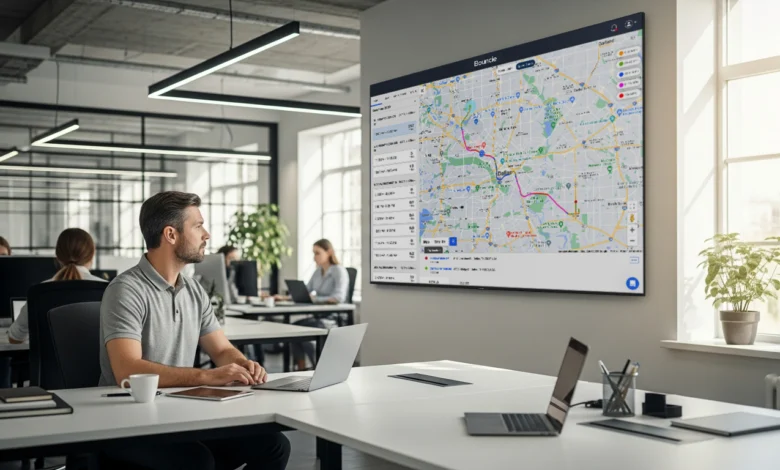
Where vehicles form some crucial aspect of your business’ function, outside of conventional company-car usage, there is an obvious case for using telematics as a central part of fleet management. But the adoption of simple telematics or tracking tools can be useful for any small business with a fleet, to monitor vehicle location, mileage, fuel use and driving behaviour. Tracking becomes a viable arm for people management as well as fleet management and cost management.