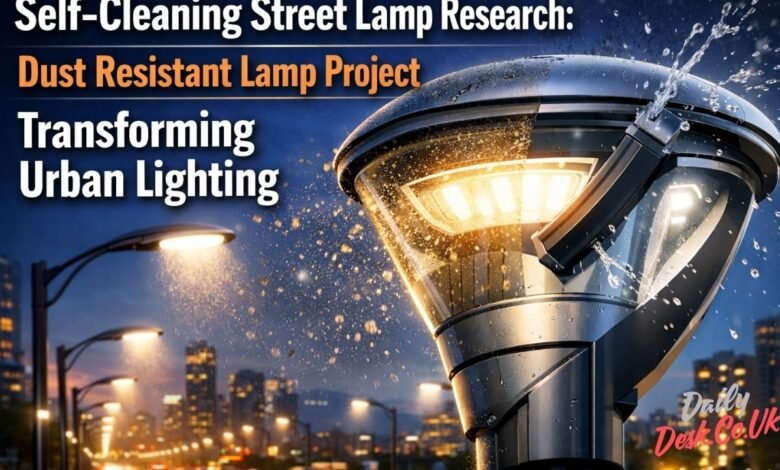
Self Cleaning Street Lamp Research Dust Resistant Lamp Project Exist Transforming Urban Lighting
Introduction
Street lighting plays a vital role in modern urban infrastructure, ensuring safety and visibility during nighttime hours. However, traditional street lamps face a persistent challenge: dust accumulation. Over time, layers of dirt and grime settle on lamp surfaces, significantly reducing their brightness and efficiency. This ongoing problem has sparked innovative developments, and today, self cleaning street lamp research dust resistant lamp project exist across the globe, demonstrating that practical solutions are actively being developed and implemented.
The concept of self-cleaning technology for outdoor lighting represents a significant advancement in urban maintenance strategies. These dust-resistant innovations promise to reduce maintenance costs, improve energy efficiency, and extend the lifespan of street lighting systems. Understanding how self cleaning street lamp research dust resistant lamp project exist in various forms helps municipalities make informed decisions about infrastructure modernization.
Background and Context
Current Challenges in Street Lamp Maintenance
Municipal authorities worldwide struggle with the demanding task of keeping street lighting clean and functional. Dust particles, pollution residue, bird droppings, and weather-related debris continuously accumulate on lamp surfaces. This buildup creates several interconnected problems that affect both performance and economics.
Traditional maintenance approaches require regular cleaning schedules, often involving specialized equipment and trained personnel. Workers must physically access each lamp, clean its surface, and ensure proper functioning. This labor-intensive process becomes particularly challenging in areas with high pollution levels or adverse weather conditions.
Impact on Lighting Performance and Energy Consumption
When dust covers a lamp’s surface, it acts as a barrier that blocks light output. Studies indicate that heavily soiled lamps can lose 30-50% of their illumination capacity. This reduction forces municipalities to either operate more lamps or increase power consumption to maintain adequate lighting levels, both of which represent inefficient resource use.
The economic implications extend beyond immediate operational costs. Reduced lighting efficiency compromises public safety, potentially increasing accident rates in poorly lit areas. Additionally, frequent maintenance interventions disrupt traffic flow and require significant budget allocations that could be directed toward other infrastructure improvements.
Economic and Environmental Motivations
The push toward developing solutions where self cleaning street lamp research dust resistant lamp project exist stems from both financial and environmental concerns. Cities allocate substantial portions of their budgets to street lighting maintenance, money that could be redirected toward other essential services. Furthermore, cleaner lamps operate more efficiently, reducing energy consumption and carbon emissions associated with municipal lighting systems.
Existing Self-Cleaning Technologies
The development of dust-resistant solutions has led researchers to explore multiple technological approaches. Each method offers unique advantages and addresses specific aspects of the contamination problem. Various examples of how self cleaning street lamp research dust resistant lamp project exist can be seen through these different technologies.
Photocatalytic Coatings
One promising avenue involves photocatalytic materials, particularly titanium dioxide (TiO2)-based surfaces. These coatings utilize ultraviolet light to break down organic contaminants into harmless substances. When sunlight strikes the treated surface, it activates a chemical reaction that decomposes dirt and grime, allowing rain or wind to wash away the residue naturally.
Several implementations have incorporated photocatalytic technology with encouraging results. The coating remains active for extended periods, requiring minimal maintenance while continuously working to prevent buildup. This passive cleaning mechanism aligns well with sustainability goals, as it harnesses natural energy sources rather than requiring additional power.
Hydrophobic and Superhydrophobic Surfaces
Another direction focuses on creating surfaces that repel water and contaminants. Hydrophobic coatings cause water droplets to bead up and roll off, carrying dust particles with them. Superhydrophobic surfaces take this concept further, achieving near-perfect water repellency that prevents virtually any liquid from adhering to the lamp.
These dust-resistant technologies mimic natural phenomena observed in lotus leaves and other plants. The microscopic surface structure creates a barrier that prevents dirt from settling firmly. When rain occurs, the water efficiently removes accumulated particles, maintaining cleanliness without human intervention.
Electrostatic Dust Repellent Systems
Some innovative implementations employ electrostatic principles to prevent dust accumulation. These systems generate a weak electric field around the lamp surface, creating a repulsive force against charged dust particles. By continuously maintaining this field, the technology prevents contaminants from settling in the first place.
This approach proves particularly effective in dry, dusty environments where traditional cleaning methods struggle to keep pace with rapid recontamination. The energy requirements remain relatively low, making it a viable option for integration into modern street lighting infrastructure.
Ultrasonic Vibration Mechanisms
Investigation into ultrasonic cleaning has yielded another potential solution. Devices that generate high-frequency vibrations can dislodge dust and debris from lamp surfaces. These vibrations occur at frequencies beyond human hearing, ensuring they don’t create noise pollution while effectively maintaining cleanliness.
Pilot implementations using ultrasonic technology have shown that periodic activation—perhaps once daily or weekly—suffices to prevent significant accumulation. The mechanical simplicity of this approach contributes to its reliability and ease of maintenance.
Current Research Projects and Initiatives
Understanding where and how self cleaning street lamp research dust resistant lamp project exist requires examining ongoing initiatives worldwide. The global community has recognized the importance of developing effective solutions, leading to numerous collaborative efforts.
Academic Research Institutions
Universities specializing in materials science and engineering have established dedicated programs examining various aspects of dust-resistant lamp design. These initiatives investigate new coating formulations, surface treatments, and integrated cleaning mechanisms. By publishing their findings, researchers contribute to a growing knowledge base that accelerates innovation across the field.
Notable work has emerged from institutions focusing on nanotechnology and smart materials. These academic centers often partner with municipalities to conduct field trials, providing real-world data that validates laboratory findings. The collaborative nature of these efforts demonstrates that self cleaning street lamp research dust resistant lamp project exist not just as theoretical concepts but as practical applications undergoing continuous refinement.
Industry-Led Development Projects
Industry leaders in lighting technology have invested significantly in developing commercial solutions. Several manufacturers have introduced product lines featuring self-cleaning capabilities, targeting municipalities seeking to modernize their infrastructure. These market-ready solutions demonstrate that viable options for implementation are available today.
Companies have recognized the substantial market opportunity in addressing this widespread challenge. Their development efforts combine proprietary technologies with open innovation, sometimes collaborating with academic researchers to accelerate progress. The fact that self cleaning street lamp research dust resistant lamp project exist in commercial catalogs indicates maturity in the field.
Government-Funded Infrastructure Programs
Government-funded initiatives in multiple countries support innovation in sustainable urban infrastructure. These programs often include street lighting upgrades as priority areas, recognizing the dual benefits of improved efficiency and reduced environmental impact. Funding enables both fundamental investigation and real-world testing through pilot installations.
Public sector involvement provides crucial resources for large-scale demonstrations. When governments invest in showing that self cleaning street lamp research dust resistant lamp project exist and deliver measurable benefits, other municipalities gain confidence to adopt similar solutions. This ripple effect accelerates technology adoption across regions.
Pilot Programs and Field Trials
Field trials serve as critical proving grounds where theoretical advantages meet practical challenges. Cities participating in pilot installations gather valuable data on performance, durability, and cost-effectiveness. These real-world tests help identify which technologies work best under specific conditions.
Successful pilots often lead to expanded implementation. When a city demonstrates that self cleaning street lamp research dust resistant lamp project exist and function reliably, neighboring municipalities take notice. This demonstration effect proves particularly powerful in convincing skeptical decision-makers to embrace innovation.
Materials and Design Innovations
Advancing self-cleaning technology requires continuous innovation in materials science. Understanding the building blocks that make self cleaning street lamp research dust resistant lamp project exist helps appreciate the complexity behind seemingly simple solutions.
Advanced Coating Materials
Scientists work to develop formulations that combine multiple beneficial properties: self-cleaning action, UV resistance, temperature stability, and long-term adhesion to various lamp substrates. Success in this area directly translates to more effective and reliable street lighting systems.
Recent breakthroughs in polymer chemistry have yielded coatings that maintain their properties for years without degradation. These advanced materials represent significant improvements over earlier generations, which often failed prematurely under harsh outdoor conditions. The evolution of coating technology exemplifies how self cleaning street lamp research dust resistant lamp project exist in progressively more refined forms.
Nano-Structured Surfaces
By engineering materials at the nanoscale, researchers create textures and patterns that fundamentally alter how substances interact with lamp surfaces. These structures can enhance water repellency, reduce friction, and create hostile environments for contaminant adhesion.
Nanofabrication techniques allow precise control over surface geometry, enabling designers to optimize performance for specific applications. The sophisticated nature of these approaches demonstrates that self cleaning street lamp research dust resistant lamp project exist at the cutting edge of materials science.
Integration with LED Technology
Modern LED street lamps operate at lower temperatures than traditional lighting, which affects how coatings perform and how dust behaves. Initiatives specifically addressing LED compatibility ensure that self-cleaning solutions remain effective across different lighting technologies.
The transition to LED infrastructure creates both opportunities and challenges. While LEDs offer inherent efficiency advantages, they require compatible self-cleaning systems. Addressing this need shows how self cleaning street lamp research dust resistant lamp project exist in response to evolving lighting technologies.
Weather-Resistant and Durable Materials
Outdoor applications demand materials that withstand extreme temperatures, moisture, UV radiation, and mechanical stress. Researchers test countless formulations to identify those offering optimal performance across diverse climatic conditions.
Durability testing subjects materials to accelerated aging protocols, simulating years of exposure in compressed timeframes. Only materials passing these rigorous evaluations become candidates for deployment. This quality-focused approach ensures that self cleaning street lamp research dust resistant lamp project exist with proven longevity.
Performance Evaluation
Assessing the effectiveness of dust-resistant lamp technologies requires comprehensive testing protocols. Understanding evaluation methods clarifies how self cleaning street lamp research dust resistant lamp project exist with verified performance characteristics.
Metrics for Measuring Cleaning Effectiveness
Cleaning effectiveness measurements compare light output between treated and untreated lamps over time. These tests typically involve exposing samples to controlled contamination conditions, then evaluating how well different self-cleaning mechanisms restore original brightness levels. Data from these evaluations help identify which technologies perform best under specific environmental conditions.
Standardized testing procedures enable fair comparisons between competing technologies. When municipalities evaluate options, they rely on these metrics to determine which solutions where self cleaning street lamp research dust resistant lamp project exist offer genuine advantages over conventional approaches.
Long-Term Durability Testing
Long-term durability testing ensures that self-cleaning properties persist throughout the lamp’s expected service life. Accelerated aging protocols subject materials to extreme conditions—intense UV exposure, temperature cycling, chemical exposure—to predict real-world performance over years or decades.
Comprehensive durability assessment provides confidence that investments in new technology will deliver sustained benefits. Knowing that self cleaning street lamp research dust resistant lamp project exist with documented long-term performance reduces adoption risk for municipalities.
Energy Efficiency Comparisons
By monitoring power consumption and light output in field installations, researchers can calculate return on investment and environmental impact. These practical assessments prove essential for convincing municipal decision-makers to adopt new solutions.
Energy audits comparing traditional and self-cleaning systems quantify operational savings. When data shows that self cleaning street lamp research dust resistant lamp project exist and reduce energy costs significantly, financial justification for implementation becomes compelling.
Cost-Benefit Analysis
Economic analysis weighs initial investment against lifecycle savings from reduced maintenance and improved efficiency. These calculations must account for local labor costs, energy prices, and expected service intervals to produce accurate projections.
Transparent cost-benefit analyses help stakeholders understand the true value proposition. Demonstrating that self cleaning street lamp research dust resistant lamp project exist with favorable economics encourages broader adoption across budget-conscious municipalities.
Challenges and Limitations
Despite significant progress, obstacles must be overcome before universal adoption becomes feasible. Acknowledging where self cleaning street lamp research dust resistant lamp project exist alongside remaining challenges provides realistic expectations.
Technical Barriers to Widespread Implementation
Technical barriers exist in creating coatings and systems that perform reliably across diverse climates and pollution levels. A solution that works excellently in one environment may prove less effective elsewhere. Development efforts must account for this variability, creating adaptable technologies or specialized solutions for different conditions.
Regional variations in dust composition, humidity levels, and temperature ranges affect performance. While self cleaning street lamp research dust resistant lamp project exist in multiple forms, no single solution yet addresses all scenarios optimally. Continued innovation aims to develop more versatile systems.
Cost Considerations
While self-cleaning lamp technologies reduce long-term maintenance expenses, their initial implementation costs often exceed traditional alternatives. Municipalities operating under tight budgets may hesitate to invest in unproven technologies, even when lifecycle analyses suggest eventual savings.
Financial constraints represent significant adoption barriers. Even though self cleaning street lamp research dust resistant lamp project exist with demonstrated benefits, upfront costs can deter implementation. Creative financing mechanisms and government incentives may help overcome this obstacle.
Environmental Conditions Affecting Performance
Environmental conditions sometimes limit self-cleaning effectiveness. For instance, photocatalytic coatings require adequate UV exposure, which may be insufficient in certain climates or during winter months. Hydrophobic surfaces depend on rainfall to wash away loosened contaminants, making them less suitable for arid regions.
Climate-specific challenges mean that self cleaning street lamp research dust resistant lamp project exist with varying applicability across geographies. Matching technology to local conditions becomes crucial for successful implementation.
Maintenance Requirements Despite Self-Cleaning Features
Systems still need periodic inspection to ensure proper functioning, and some cleaning mechanisms require occasional servicing. Setting realistic expectations about reduced—rather than eliminated—maintenance needs helps prevent disappointment.
Understanding that self cleaning street lamp research dust resistant lamp project exist as maintenance-reduction rather than maintenance-elimination solutions helps frame appropriate expectations. Even advanced systems benefit from occasional human oversight.
Future Directions
The trajectory of development points toward increasingly sophisticated and integrated solutions. Examining where self cleaning street lamp research dust resistant lamp project exist today suggests exciting possibilities for tomorrow.
Integration with Smart City Infrastructure
Self-cleaning lamps equipped with sensors could monitor their own cleanliness levels, reporting when performance drops below acceptable thresholds. This data-driven approach enables predictive maintenance, optimizing resource allocation and ensuring consistent lighting quality across urban networks.
Smart city integration represents the next evolution. As self cleaning street lamp research dust resistant lamp project exist alongside Internet of Things infrastructure, synergies emerge that enhance both systems’ capabilities. Intelligent networks can coordinate cleaning cycles, monitor performance trends, and automatically request service when needed.
Potential for Solar-Powered Self-Cleaning Systems
By combining renewable energy generation with automated cleaning mechanisms, these initiatives aim to create truly autonomous lighting solutions. Such systems would require minimal grid connection and generate their own power for both illumination and maintenance functions.
Solar integration offers particular promise for remote or underserved areas. Where self cleaning street lamp research dust resistant lamp project exist with solar capabilities, infrastructure can expand without extensive grid investments.
Scalability and Commercialization Prospects
As more companies enter the market and production volumes increase, costs should decrease, making adoption more attractive to budget-conscious municipalities. Standardization efforts will help ensure compatibility and simplify procurement processes.
Market maturation accelerates when self cleaning street lamp research dust resistant lamp project exist at competitive price points. Economies of scale drive costs downward, expanding addressable markets and encouraging further innovation.
Research Gaps and Opportunities
Addressing knowledge gaps through continued investigation will yield incremental improvements that collectively transform street lighting infrastructure. Priority areas include extreme environment performance, hybrid system optimization, and standardized evaluation protocols.
Identifying where self cleaning street lamp research dust resistant lamp project exist with incomplete understanding guides resource allocation toward high-impact investigations. Collaborative efforts between academia and industry can efficiently address these gaps.
Conclusion
Self cleaning street lamp research dust resistant lamp project exist today in various forms, demonstrating remarkable progress in addressing one of urban infrastructure’s persistent challenges. Multiple technological approaches—from photocatalytic coatings to ultrasonic cleaning—have proven viable in diverse contexts. Current initiatives continue refining these technologies, improving performance while reducing costs.
The fact that self cleaning street lamp research dust resistant lamp project exist across academic institutions, commercial enterprises, and government programs indicates widespread recognition of their importance. The potential impact on urban infrastructure extends beyond simple maintenance savings. Cleaner, more efficient street lighting enhances public safety, reduces energy consumption, and supports sustainability goals.
As cities worldwide seek to modernize their infrastructure, the solutions that currently exist offer compelling benefits aligning with broader smart city initiatives. Recommendations for further development include creating hybrid systems combining multiple cleaning mechanisms, developing regionally optimized solutions for different climates, and establishing long-term field studies providing robust performance data.
By pursuing these directions, the community can accelerate the transition from experimental implementations to mainstream adoption. The evidence is clear: self cleaning street lamp research dust resistant lamp project exist not merely as futuristic concepts but as practical, deployable technologies transforming how cities maintain their essential lighting infrastructure. The continued evolution of these systems promises even greater benefits in the years ahead, making urban environments safer, more sustainable, and more efficiently managed.
Read Also: Snap vs Sent a Snap: Understanding What Shared Some Really Means